When AI Lobsters Take Over Shopping Carts, How Does Bidnex Use CPS to Reconstruct the Trust Foundation of Digital Advertising
"Would you let AI help you shop?" - A question that once only existed in science fiction is becoming a daily reality for contemporary people.
I. When AI Places Orders for People, What Should Advertising Be Charged For?
Technology companies are accelerating their layouts.
Platforms like ChatGPT and Google have successively launched AI purchasing functions; OpenClaw can even directly operate keyboards and mice, completing the entire process from product research, cross-platform price comparison to final order placement.
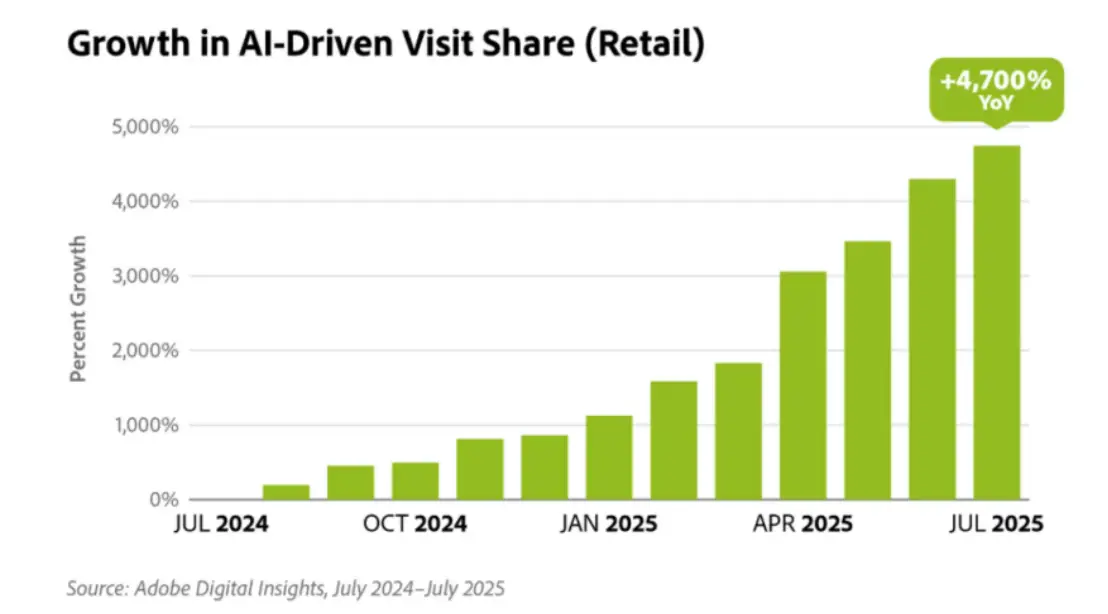
Adobe Business observed a startling trend:AI-driven traffic on U.S. retail websites surged by 4700% year-over-year.
To respond to this change, Visa introduced the "Trusted Agent Protocol" (TAP) last October, attempting to help merchants differentiate legitimate AI agents from malicious bots.
All of this points to the same issue: when clicks and browsing are increasingly performed by AI rather than real users,can our decades-old advertising billing models—CPM (cost per impression), CPC (cost per click)—still truly reflect marketing effectiveness?
II. The Dilemma of 'Process Data' in the AI Era
The advertising industry is no stranger to non-human traffic. Over the past two decades, anti-cheat systems have been battling bots and fake clicks.
Today's situation is more complex than ever before. The prevalence of generative AI has made malicious traffic increasingly resemble human behavior. In the field of ad safety,this type of traffic is called SIVT (Sophisticated Invalid Traffic).Cheaters use automation tools like Puppeteer combined with machine learning models to train bots to produce mouse trajectories and page interactions similar to humans.
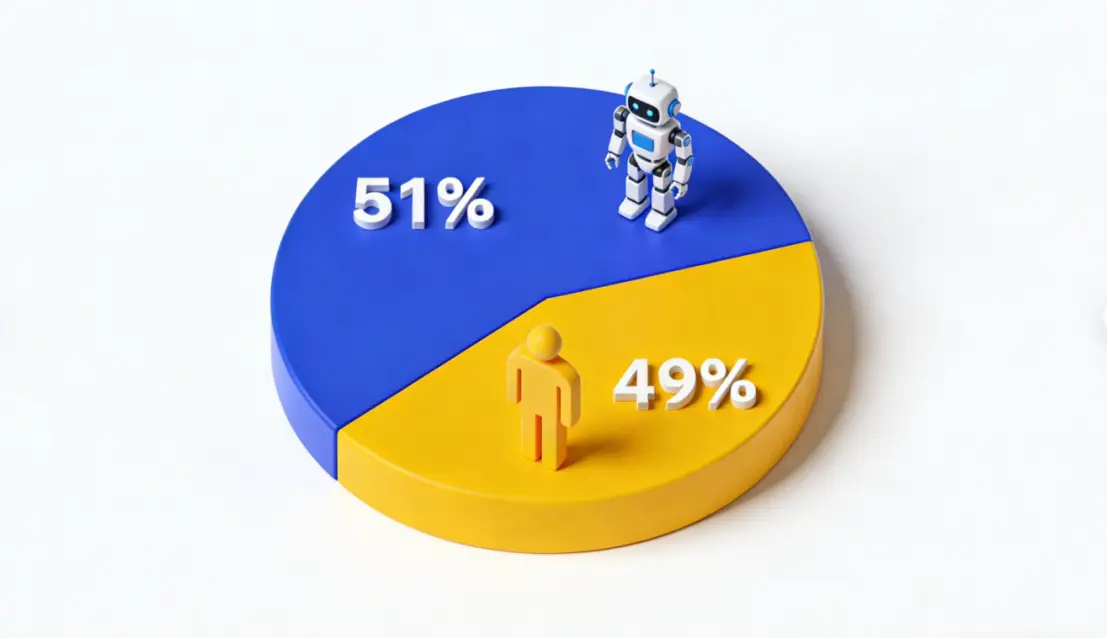
According to the '2025 Imperva Malicious Bot Report', an important turning point has arrived:automated bot traffic accounts for 51% of total internet traffic, making humans a 'minority' in the digital world for the first time.Among which, malicious bot-generated traffic accounts for 37%.
However, not all AI traffic is malicious. The 4700% surge in AI-driven traffic includes both consumer-friendly assistants and budget-consuming impostors.The problem lies in the fact that their behavioral characteristics are becoming increasingly difficult to distinguish.
Thus, advertisers are caught in a trust crisis:Is the money I pay buying me real potential customers or just a carefully orchestrated script?
III. Three Paths to Breakthrough
Facing increasingly intelligent AI traffic, simply 'avoiding' or 'completely rejecting' is biased. The true response is to simultaneously focus on three directions.
01 Embrace 'Good AI', Optimize Content for Agents
Not all AI traffic is the enemy.Bain & Company’s research shows that 80% of consumers rely on 'zero-click results' in at least 40% of searches.
When users get answers directly from the AI interface without clicking into websites,traditional SEO needs to evolve towards GEO (Generation Engine Optimization) or AEO (Agent Engine Optimization).
This means brands will need to change their content production methods in the future: AI doesn't have dopamine, it won't be swayed by 'limited-time offers' in big red letters, it only believes in structured data and authoritative sources.
Firstly, content must be 'structured'.On one hand, adding JSON-LD to the webpage source code allows search engines and AI to understand product information more easily; on the other hand, providing standardized APIs facilitates various agents and third-party systems to stably obtain the latest data.
Secondly, building credible sources.Muck Rack’s research analyzing over a million AI-cited links last year found that95% of AI citations come from unpaid media, 89% from reputable media, and nearly half of the citations originate from news content.This means brands need to plan ahead comprehensively to appear in areas trusted by AI.
In AI recommendation scenarios, brands that are more likely to gain exposure are usually those that have laid out earlier, provided richer content, and updated more promptly in key trusted sources.
In actual ad placements, the platform's own accumulation of credible sources is equally important.
Bidnex Global Traffic and Local Service Capabilities
l Extensive Global Traffic Coverage:With over 700 million accumulated traffic, covering core markets such as Southeast Asia, India, Middle East and North Africa, Latin America, and Russia.
l Deep Regional Cooperation Network:Building localized cooperation networks, establishing deep collaborations with local mainstream media, content platforms, and community media, breaking through barriers in each region's digital ecosystem; equipped with local optimizers and design teams to ensure efficient implementation of placement strategies.
l Fine-grained Traffic Tier Management:Adopting a tiered traffic management model, dynamically updating the media resource library, timely eliminating low-quality or fraudulent traffic, ensuring the media library remains highly efficient and trustworthy.
l Localized Placement Achievements:In Southeast Asian e-commerce cases, leveraging localized capabilities helped Shopee achieve during promotional periods: a 32% increase in CTR, a 25% increase in conversion rate, and a 133% rise in average daily ad revenue, proving the core value that 'the truer the traffic, the better'.
02 Defend Against 'Malicious AI', Technological Countermeasures Upgrade
Imperva's report reveals a reality: 44% of advanced bot traffic targets APIs. Attackers are no longer just hitting interfaces but exploiting vulnerabilities in API workflows and business logic to implement automated payment fraud, account hijacking, and even data theft.
This means API security faces not just traditional anti-cheating issues but more complex business logic abuse and automated attack risks.
Facing this situation, monitoring technology must also upgrade.Some leading ad tech companies are building multi-layered technical protection systems.
Bidnex Anti-Ad Fraud and Traffic Quality Assurance System
l Self-developed AI Real-time Monitoring System:Building an end-to-end AI real-time monitoring system, dynamically analyzing the ad placement process, intelligently identifying and intercepting abnormal behaviors to ensure the authenticity and effectiveness of ad effects. The system covers the entire chain from traffic entry to final display, performing real-time analysis of behavioral characteristics and issuing warnings and interceptions before false traffic consumes budgets.
l International Authoritative Third-party Anti-Fraud Cooperation:Collaborating with international authoritative anti-fraud platforms like HUMAN and Pixalate to introduce third-party verification services. Under the dual assurance mechanism of self-developed systems and third-party verifications, every ad impression's authenticity and security undergo cross-verification.
l Industry Compliance Certification Endorsement:Continuously passing IAB OMSDK certification for three years, receiving authoritative endorsements in ad viewability measurement and compliance aspects.
The essence of this combination solution is to raise the cost of fraud: when cheaters face a multi-layered cross-verified protection system, breaking through each line of defense requires higher technical costs until fraud becomes 'economically unfeasible'.
03 CPS Settlement Model
Technology keeps advancing, solving the issue of 'process data authenticity'. The logic of CPS (Cost Per Sale) bypasses process data, directly using transactions as the unit of measurement.
CPS rules are simple:advertisers only pay commissions to channels after a product sale.A genuine transaction needs to go through payment gateways, generate logistics tracking numbers, leave order records on e-commerce platforms, and these data are verified by multiple parties, forming a traceable chain. The difficulty of forging is much higher than creating clicks and impressions.
In fact, CPS is not a new business model but is being re-examined in the era of full AI penetration.The core lies in its alignment with the most fundamental commercial logic: the ultimate goal of marketing is to facilitate transactions, not just gain traffic and interactions.Unlike easily tampered-with and forged click volumes and impressions, CPS settlement relies on payment records, logistics tracking numbers, and platform transaction orders, which are verified by multiple parties including payment institutions, e-commerce platforms, and logistics systems, currently difficult for AI to simulate.
More importantly, the CPS model aligns the interests of brands and channels. Both sides no longer overly dwell on the authenticity of intermediate data but jointly focus on product competitiveness, user experience, and final conversion. This interest binding has proven effective in practice.
l Bidnex uses self-developed AI models to analyze bestseller features in real-time, combining historical survey data and professional optimizer experience for product selection and preheating placements, achieving tripled GMV for partner merchants during last year's Double Twelve period.
IV. Returning to the Essence of Advertising
However, thinking that CPS will replace CPM and CPC misunderstands the operational logic of the advertising industry.
Think about our own consumption decisions. The first time we hear about a brand is often through an article, a video, or an exposure.
These touchpoints don’t lead to immediate purchases at the moment they occur; they merely plant a seed in the mind. Months later, when relevant needs arise, this seed may sprout.
This process is the well-known marketing 'funnel': broad exposure at the top, interest cultivation in the middle, and conversion at the bottom.
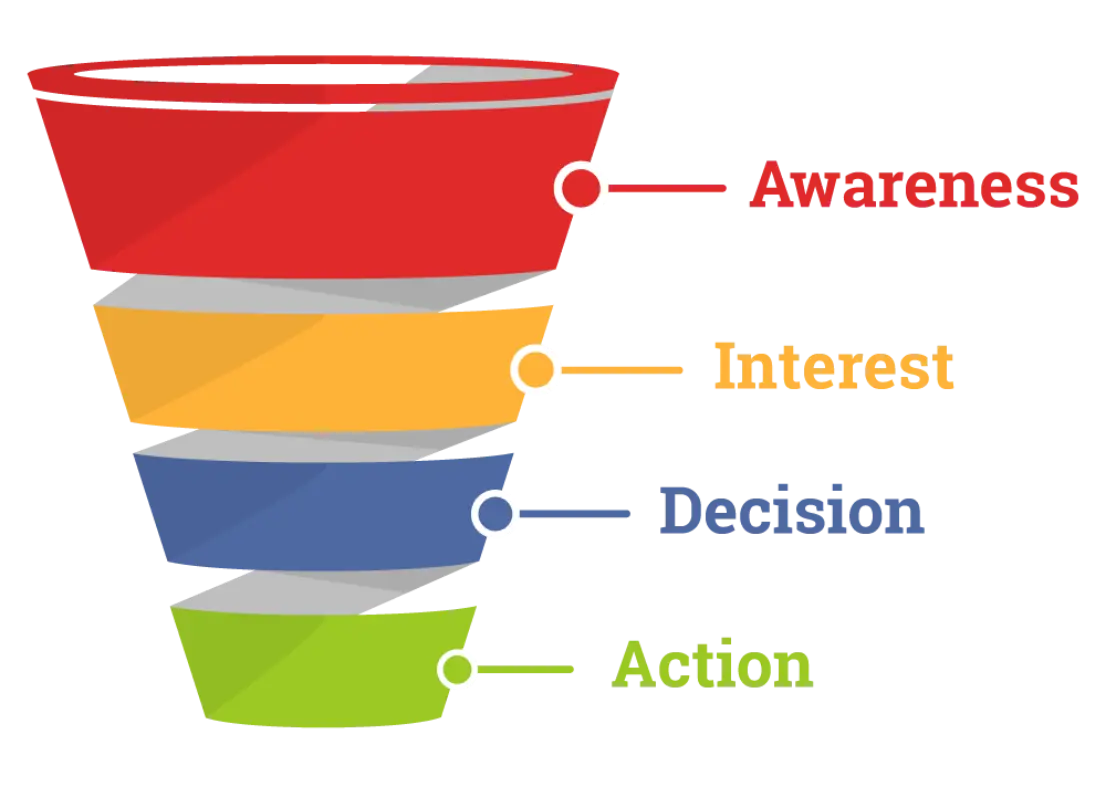
What process data measures is the establishment of awareness, the accumulation of impressions, and the occupation of mindshare. Without top-level exposure and mid-level seeding, conversions at the bottom of the funnel would not happen.
From this perspective, the significance of CPS is not in 'replacement' but in providing a calibration scale.When AI traffic is difficult to distinguish between true and false, transaction data can become the final yardstick. It can be used to verify the credibility of process data, backtrack channel traffic quality, and align advertisers and channel partners on the same side.
V. Epilogue
Perhaps the developers of OpenClaw did not expect that their efficiency tool would bring an ancient question in the advertising industry back to the forefront: what is the trustworthy unit of measurement in the digital world?
When AI starts placing orders for people, clicks no longer come from real users, and impressions no longer equal visibility, it's easy to fall into techno-deterministic anxiety, feeling that everything can be forged and nothing is trustworthy. But returning to the starting point of commerce, we remember a simple fact: ultimately, ads aim to influence people.
Yes,AI compares prices for us, places orders for us, and screens for us. But what AI cannot replace are the moments when people are touched—resonance upon seeing an advertisement, impressions while passing by an outdoor billboard, or a knowing smile while scrolling through social media content.
These moments cannot be quantified into immediate transactions, but they constitute the presence of a brand in consumers' minds. Transactions are the result, but the path before the transaction is paved step by step by process data.
When AI makes everything difficult to distinguish between true and false, we need smarter technologies to purify process data, and result data as the final anchor point. Regardless of how technology evolves, the endpoint of advertising is always people. That ultimate arbiter of 'truth' will always be the person behind the screen.

As a global intelligent programmatic trading platform, Bidnex connects massive global advertising budgets with media resources, achieving efficient value matching between supply and demand in traffic. The platform deeply integrates AI technology, achieving algorithm-driven efficiencies in core processes like real-time bidding, precise targeting, and dynamic creative optimization, continuously enhancing marketing efficiency and ROI. Through self-developed machine learning detection technology and collaboration with international authoritative anti-fraud platforms, Bidnex ensures the authenticity and security of every ad impression under dual safeguards, creating a transparent and secure programmatic ecosystem.