Going Global Report | Bidnex Launches AlgoVideo and AlgoMovie: Enabling Sustainable Production of Cross-border Marketing Videos and AI Drama Shorts
A single sentence can generate an image, a photo can be transformed into a video, and a spark of inspiration can evolve into storylines, characters, and storyboards. Generative AI is significantly shortening the time required to go from concept to final content production.
Faster initial content generation does not necessarily reduce subsequent workload.
For cross-border merchants, completing one marketing video typically addresses only a single product's content need in one market. When products enter other countries and regions, language, voiceovers, subtitles, and character portrayals must be re-adapted; new versions must also be created whenever promotional messages or marketing themes change.
Creators of drama shorts face consistency challenges across episodes. While a character image, plot segment, or storyboard set can be quickly generated, characters must carry through subsequent episodes, scenes will be reused, and plots and storyboards must maintain continuity. Even with rapid single-generation capabilities, automatically managing these connections and assets remains difficult.
These issues continuously consume creative teams' time and resources. How to transition from one-time generation to sustainable, production-ready video creation has become the next challenge for AI content production.
During ChinaJoy 2026, Bidnex introduced AlgoVideo and AlgoMovie, targeting cross-border e-commerce marketing videos and AI drama shorts creation respectively. AlgoVideo focuses on production and distribution of deployable e-commerce marketing videos, while AlgoMovie emphasizes zero-barrier, low-cost AI short drama creation; both products integrate post-generation editing, reuse, and management into project workflows.


From Model Invocation to Content Completion: How Much Work Remains?
Over the past few years, model capabilities have been the most closely watched aspect of AI content creation.
Image quality, video coherence, character consistency, and natural-sounding audio directly determine whether generated results are production-ready.
As models continue advancing, creative teams now have access to increasingly sophisticated text, image, video, and voice capabilities.
However, complete content projects typically involve scripting, image creation, video production, voiceover, and subtitling. When these capabilities are scattered across different tools, creators still need to organize assets, transfer generated results, adjust prompts, and manage version control and files.
Model improvements can shorten individual task processing times, but overall project duration depends on seamless integration between scripts, assets, and different versions.
How Can One Marketing Video Serve Multiple Markets?
Cross-border marketing videos inherently require multiple versions.
Multi-version production involves more than simple translation of the same video. Markets, promotional timing, and account schedules may change simultaneously—updating one element might require synchronized adjustments to voiceovers, subtitles, visuals, and publishing plans. With numerous versions, the real time sink becomes continuous modifications and cross-checking.
If every information update requires rebuilding videos from scratch, even with AI-accelerated initial production, substantial redundant work remains.
Therefore, the actual efficiency of cross-border marketing video production depends not only on rapid content generation but also on how effectively initial content can be repurposed.
AlgoVideo organizes video production around products and marketing tasks. Users can upload product images, character assets, or reference videos, then continue processing scripts, storyboards, visuals, audio, and final output within the same project.
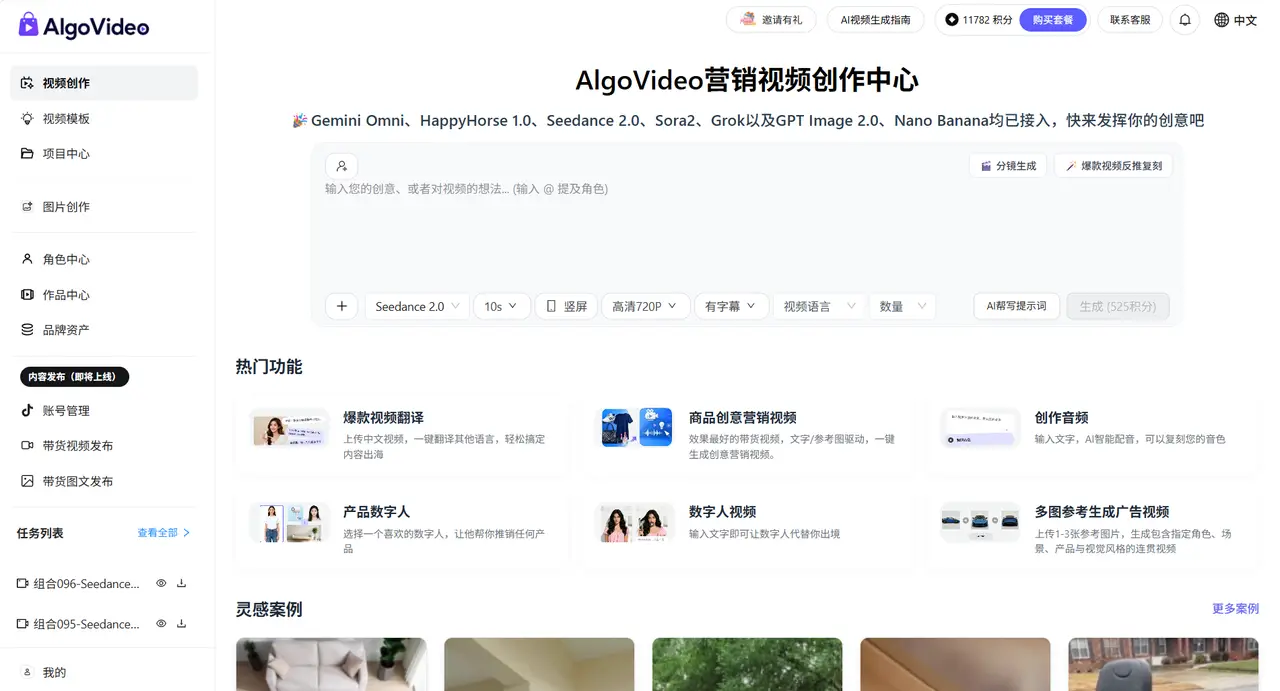
AlgoVideo Marketing Video Creation Workspace
AlgoVideo integrates with models including Seedance 2.5 and Nano Banana, supports digital human voiceovers, and delivers 1080P video output. Generated images, videos, and related assets remain within projects for subsequent adjustments and version production, reducing repetitive downloading, uploading, and asset organization across different tools.
When targeting different countries and regions, merchants can replace voiceover languages and audio tracks while synchronously adjusting subtitles and character lip movements. When adapting popular videos, the video reverse-engineering feature analyzes content structure, allowing creators to modify products, characters, and marketing themes without rebuilding entire productions.
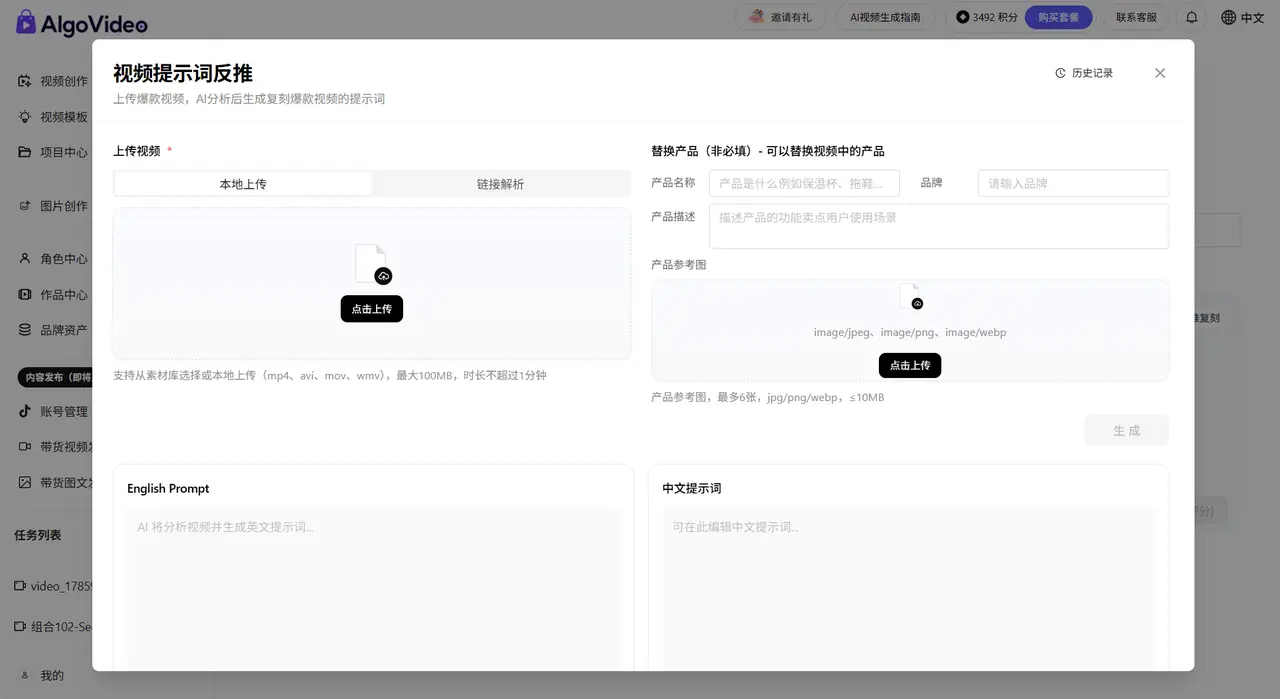
AlgoVideo reverse-engineers reference video prompts for quick product replacement and replication
When Videos Target Multiple Accounts, Publishing Becomes Part of the Workflow
When distributing the same video across different accounts, operations personnel must verify version details, product information, and launch timing for each account. As account and version counts grow, coordination between content and operations teams becomes increasingly complex.
Through TikTok's official API, AlgoVideo directly connects to operational accounts. After video completion, users can select publishing accounts, verify details, configure product links, and schedule launch times within the platform; post-publication analytics from TikTok's official interface are also directly accessible in AlgoVideo.

After connecting TikTok accounts, product-promoting videos can be scheduled within AlgoVideo
For merchants needing continuous content publishing across multiple accounts, this integration bridges video production and account management, eliminating repetitive video uploads and information verification after final delivery.
Drama Creation Complexity Grows With the Story
Marketing videos require continuous new versions, while drama series must sustain the same story long-term.
As stories progress through chapters, characters, scenes, plots, and storyboards develop increasingly complex interdependencies. Adjusting a character design may affect multiple storyboards; plot changes require rechecking dialogues, scenes, and shots.
In traditional production, writers, artists, and storyboard teams maintain these connections through style guides, asset libraries, and project documentation. While AI accelerates content generation, maintaining character consistency, plot continuity, and asset management remains essential throughout serialization.
AlgoMovie supports project initiation from a single idea, novel, or existing script, then continues through plot planning, character and scene design, storyboard generation, and audiovisual asset creation.
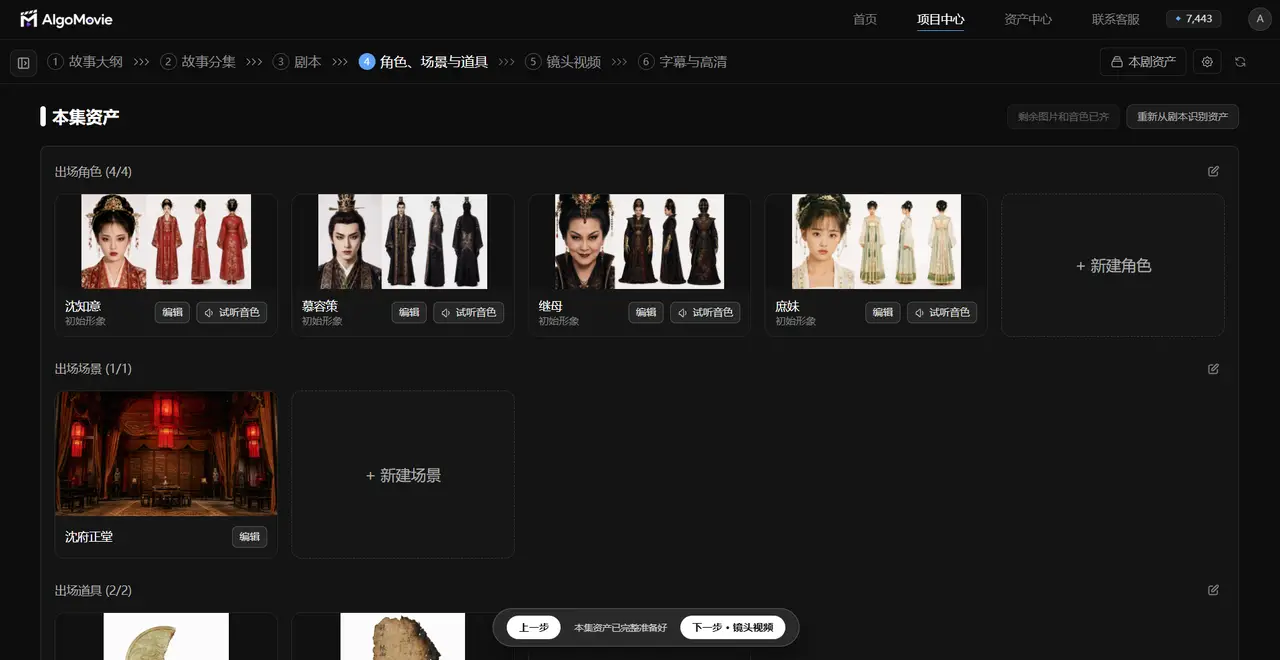
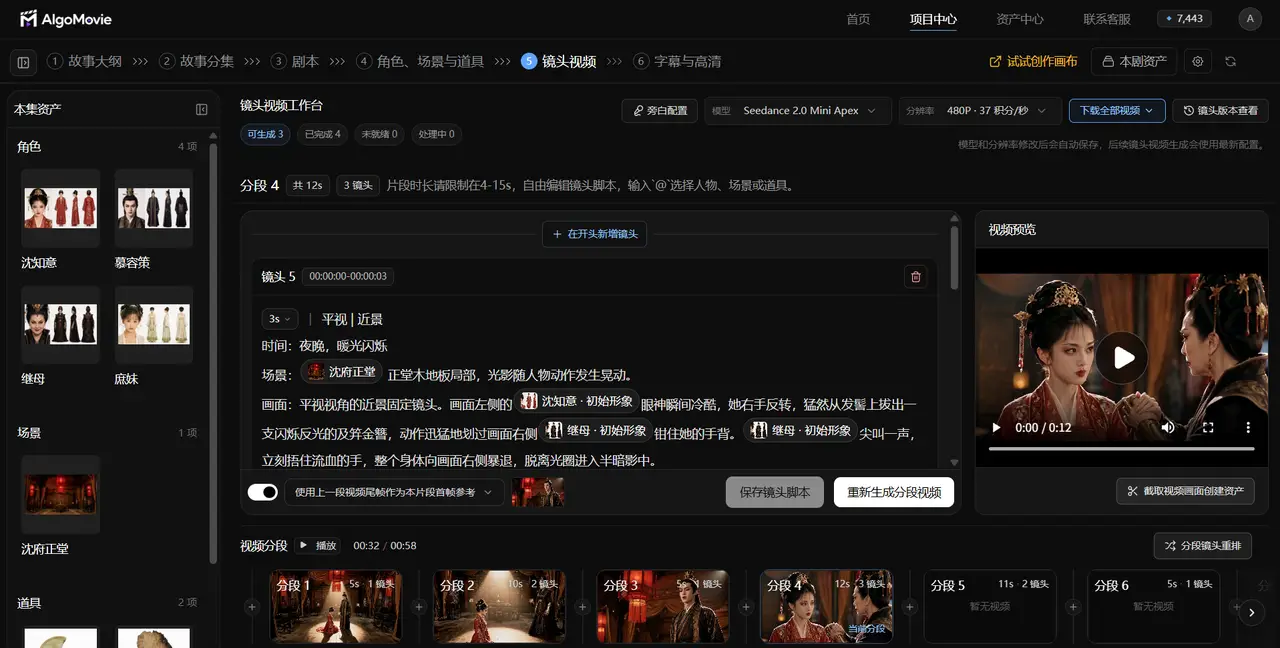
AlgoMovie enables different creative tasks within a single project
For subsequent episodes, creators need to reuse established characters and scenes while focusing on new plot elements and shots.
In AlgoMovie, established characters and scenes remain available for future storyboards. When specific plot segments, dialogues, storyboards, or visuals require adjustment, creators can modify those elements without rebuilding the entire project.
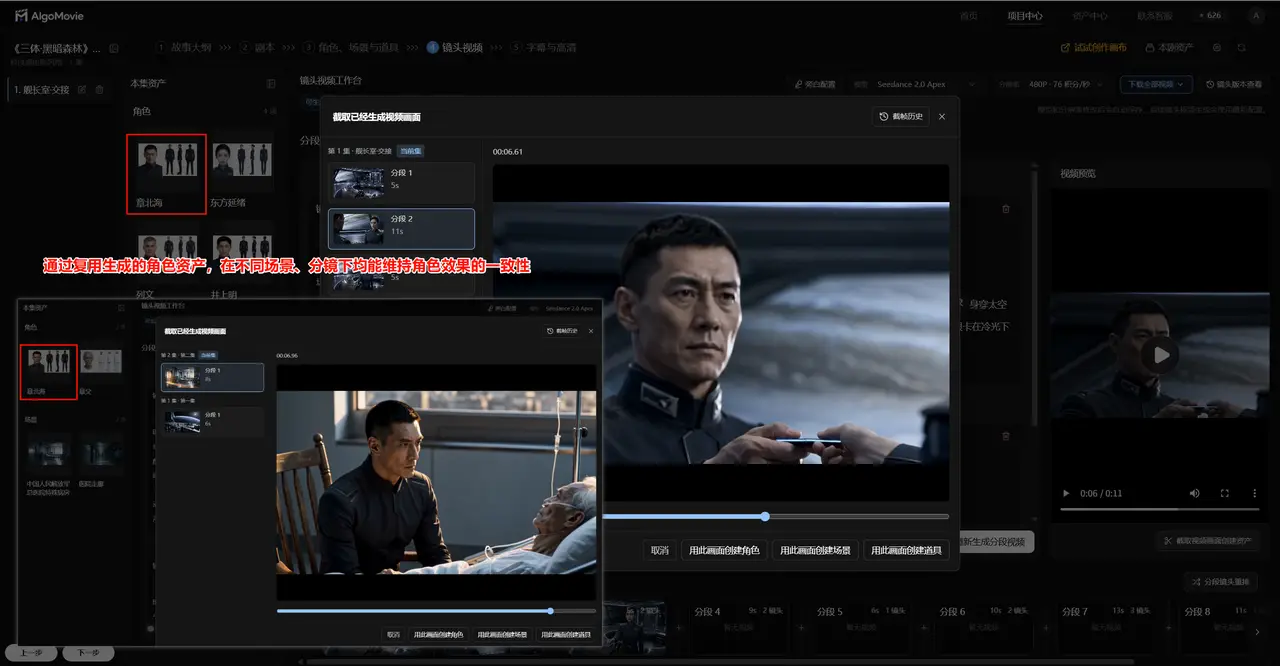
AlgoMovie enables reuse of existing character assets during production to maintain visual consistency
As Content Grows, Creators Need Visibility Into Relationships
As episodes and storyboards multiply, established characters, scenes, and plot points recur throughout projects, increasing structural complexity.
The same character may appear in multiple storyboards, a single scene may host different plotlines, and adjustments to one plot point may affect preceding and following episodes. When these elements are scattered across different pages or files, creators must frequently switch contexts and manually verify connections.
AlgoMovie's built-in AI Canvas consolidates plots, characters, scenes, and storyboards within a single visual workspace. Creators can freely drag, add, and adjust nodes to create, expand, organize, and manage story content.
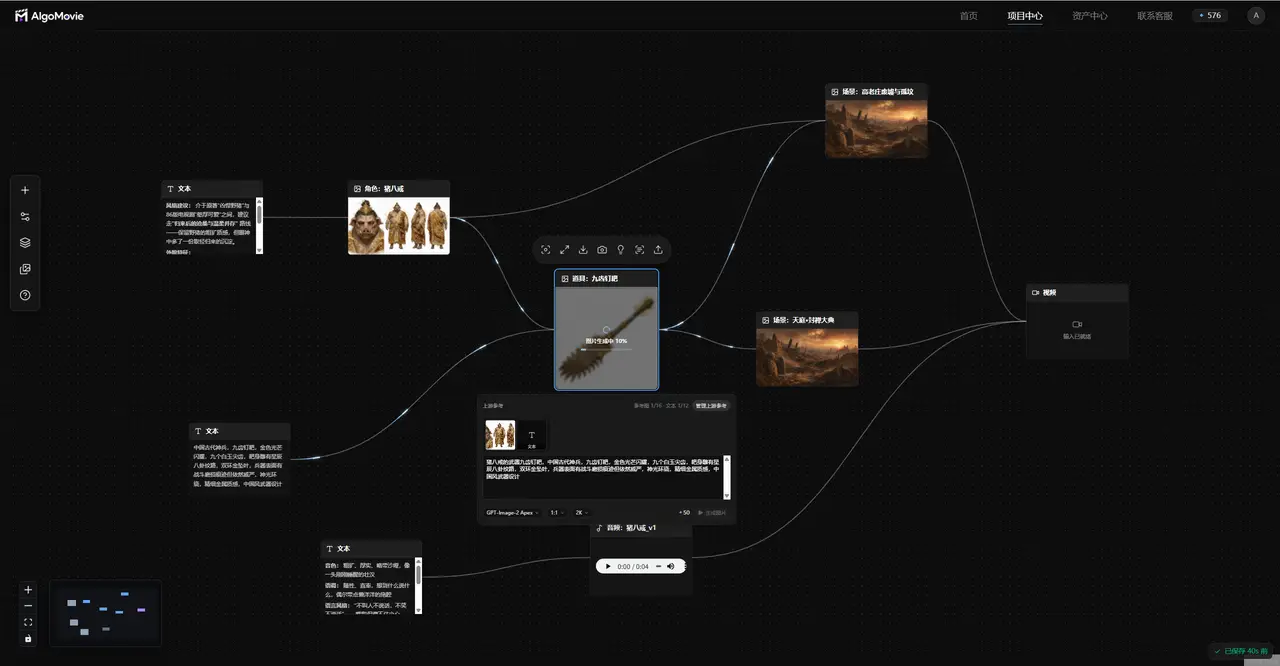
Node layout of plots, characters, scenes, and storyboards in AlgoMovie AI Canvas
The video workspace focuses on episode-specific production, while the AI Canvas provides a holistic view for story oversight.
Behind These Products: Bidnex Expands Into Content Production
The launch of AlgoVideo and AlgoMovie extends Bidnex's business into content production. Previously, Bidnex primarily focused on advertising, media monetization, and cloud/AI services; these products now cover the content production phase preceding advertising and channel operations.
Both products connect directly with Bidnex's existing business. Cross-border marketing videos link to advertising asset supply, while AI drama creation involves sequential invocation of text, image, video, and voice models—one adjacent to advertising, the other to cloud/AI services—both finding natural integration points within current operations.
Currently, both AlgoVideo and AlgoMovie are live and available for use.
AlgoVideo official website: https://algovideo.ai/
AlgoMovie official website: https://algomovie.ai/